Could there be a wild bee colony within a mile of you?
1,149 of the 1,158 wild colonies we've found haven't been checked on in years — some since 2008. A one-minute visit could tell us whether one near you is still alive.
Validate a colonyWhy non-managed colonies matter
Somewhere near you, there's almost certainly a colony of honey bees living wild — no beekeeper, no treatments, no help. It's been there for years. And it might be one of the most valuable bees in America.
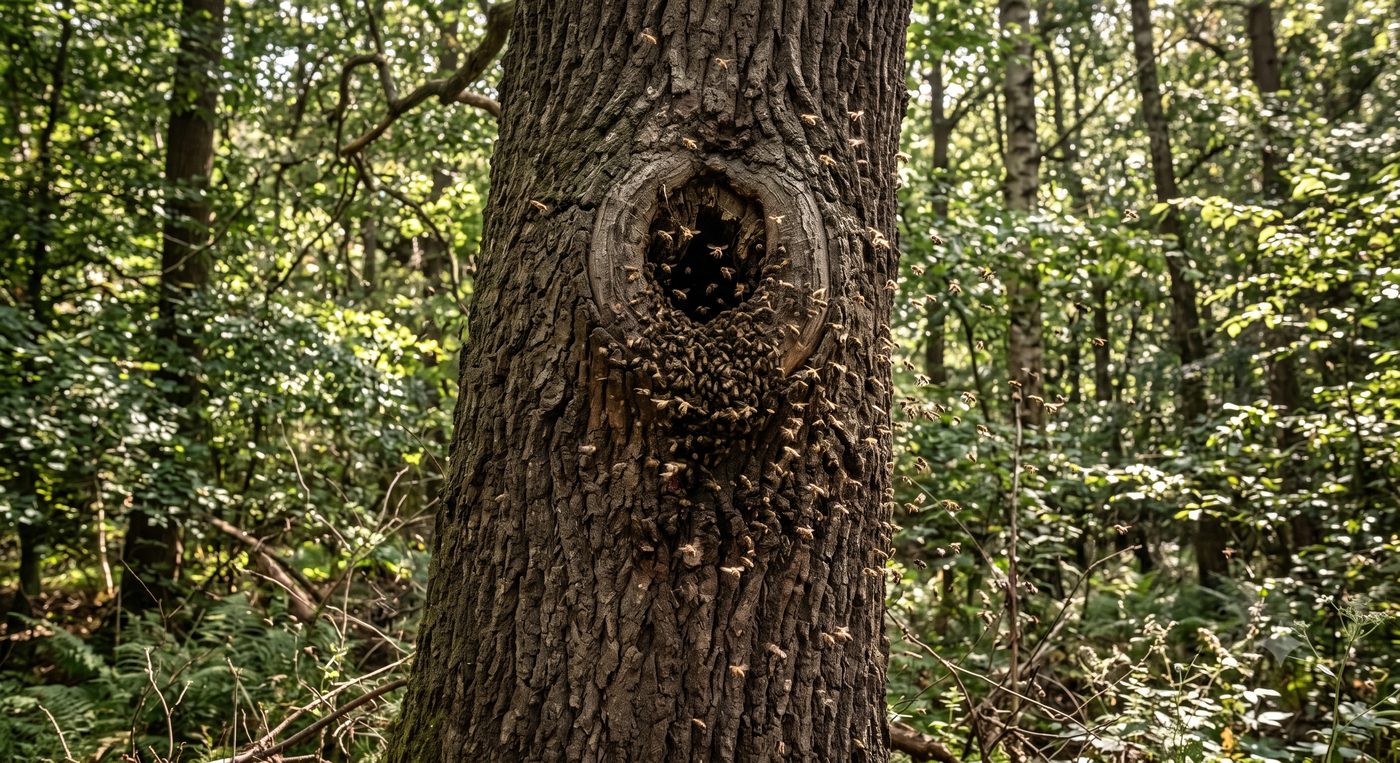
Since the mid-2000s, U.S. beekeepers have lost roughly 30–50% of their managed colonies every single year — to mites, the viruses they spread, pesticides, and habitat loss. Most surviving colonies only make it because beekeepers treat them constantly. Take the treatments away, and most managed bees die within a couple of winters.
But not all of them. Honeybees living in:
are non-managed colonies that survive winter after winter with no help at all. A colony that persists three or more seasons on its own isn't just lucky — it's come through real, sustained natural selection. That's why this project calls them Genetic Goldmines: not because the genetics are proven, but because each one is a real candidate for understanding how honey bees might survive without constant chemical support.
"Every wild colony that survives on its own, untreated, is doing an experiment nature has been running for free. Every pin on the map is a lead. Every 'still alive' check-in is data no researcher could otherwise get."
Nobody currently tracks where these survivor colonies are. Most are found by accident — by a hiker, a beekeeper chasing a swarm — and then forgotten. SaveTheHives exists to fix that.